
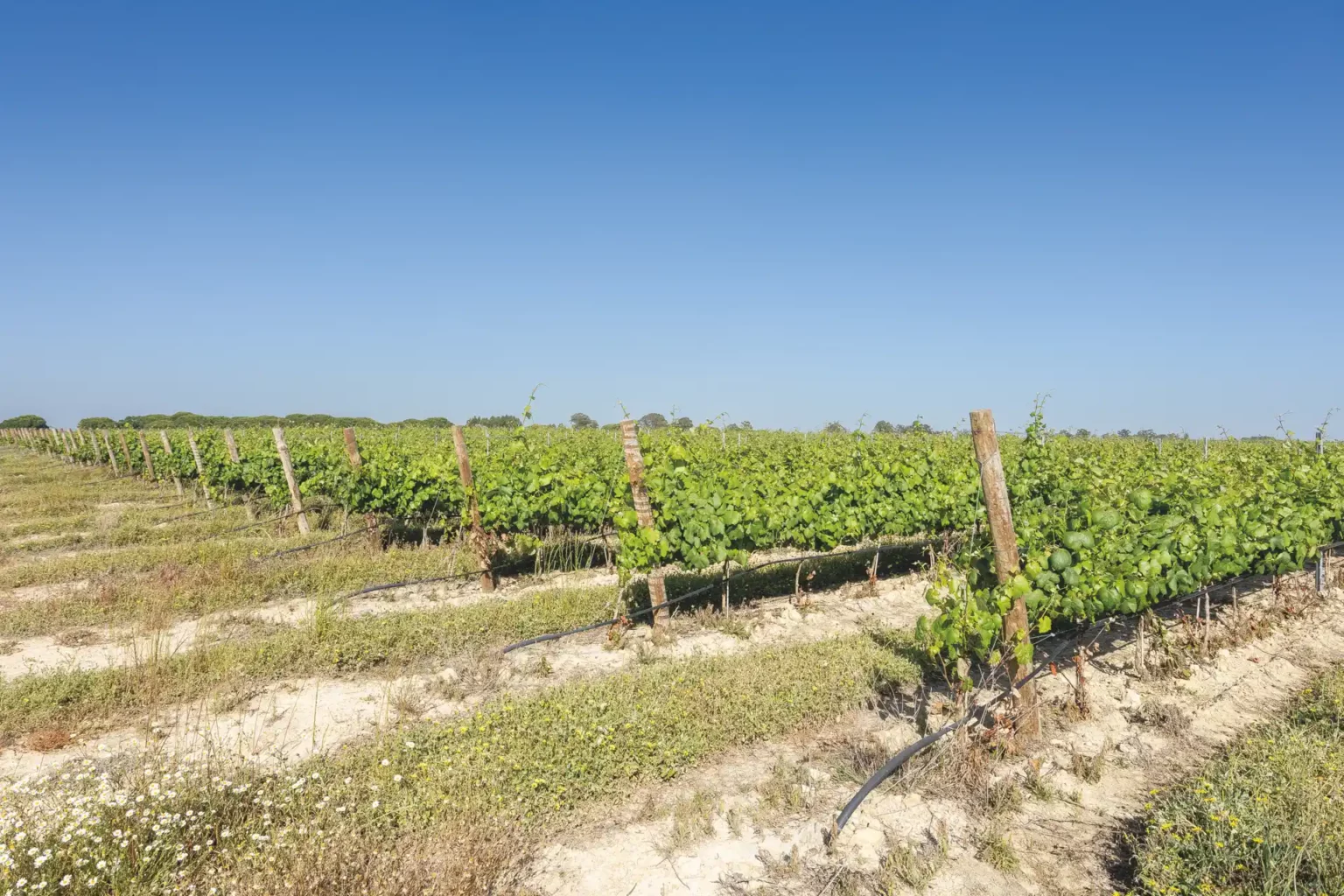
Modern viticulture is facing a turning point. Soil degradation, climate variability imposed by the Mediterranean climate, pressure on water resources and loss of biodiversity are challenging the resilience and viability of viticultural systems in various regions of the world, with a high incidence in southern Europe. This scenario requires more than a technical response: it demands a paradigm shift.
Regenerative viticulture proposes just that — an approach that combines the principles of ecology with the planning, management, and evaluation of production systems. Its central premise is simple: it is not enough to reduce negative impacts; it is necessary to restore natural cycles and return vitality to the soil and the agricultural landscape.
This approach differs from models such as organic farming or integrated production in that it places living soil at its core. Functional soil is more than a physical substrate: it is a complex organism, with millions of interactions between microorganisms, roots, water, organic matter and minerals. The structure and dynamics of this soil largely determine the expression of the vineyard, the quality of the grapes and the longevity of the system.
In practice, this implies management geared towards biological stability rather than immediate response. The presence of permanent and diversified vegetation cover is essential, as it protects the soil from erosion, increases organic matter and promotes the development of auxiliary fauna. The controlled introduction of small ruminants in rotational grazing can be used to integrate crops and mobilise nutrients naturally.
Composting, combined with biofertilisation using botanical extracts and microbiological preparations, reduces dependence on external inputs and activates nutrient recycling processes at farm and regional level. Pruning and canopy management, when based on plant physiology and not just on production objectives, contribute to reducing stress on the vine and stimulating self-regulation mechanisms. Finally, continuous monitoring of soil microbiology, water dynamics and plant nutrients, using sensors and biological indicators, allows for more accurate and preventive decision-making.
In the context of Mediterranean viticulture, these practices have demonstrated significant gains in water efficiency, resilience to heat stress, reduction in phytosanitary treatments, and improvement in the phenolic and aromatic quality of grapes. Furthermore, they have contributed to the enhancement of the territory and the reconnection between winegrowers and the natural processes that sustain production.
Regenerative viticulture also invites a more systemic reading of the landscape. A regenerative vineyard does not exist in isolation: it is part of a larger agricultural and ecological mosaic, where forest areas, ecological corridors, water retention areas, and multi-use spaces intersect. Regenerative planning therefore requires an interdisciplinary approach that combines agronomy, ecology, soil engineering, climatology and local empirical knowledge.
From an economic point of view, the regenerative model tends to reduce dependence on external inputs, increase production stability over time and create products with higher added value, not only because of their organoleptic profile, but also because of the environmental commitment that underpins them.
It is, therefore, a climate mitigation and adaptation strategy with direct benefits for the competitiveness of quality viticulture, which aims to produce agricultural goods with higher added value and views productivity through the prism of profitability per unit area rather than quantity per unit area.
If the agriculture of the future is to be efficient, resilient and carbon neutral, then regenerative viticulture represents one of the most promising avenues. It is not just a trend, but a technical and ethical response to the contemporary challenges facing agriculture. Regenerating the soil means regenerating the system that depends on it — including wine and those who produce it.
About the author Renato Neves is a winegrower and winemaker in the Alentejo region and currently leads the production of the Herdade das Servas wine project, focusing on regenerative practices, technological innovation and agroecological sustainability. He is co-founder of the Regenerative Wine Fest and has contributed to the implementation of regenerative agriculture in the wine sector in Portugal.
Renato Neves – Herdade das Servas