
What is the Path to Sustainable Fruit Growing?
With climate change becoming increasingly evident in Portugal and around the world, agriculture — and fruit growing in particular — is facing growing challenges. Extreme weather events and unstable climate patterns are forcing producers to adapt and re-evaluate their practices with a view to sustainability and profitability. In this context, a key question arises: is it worth investing in protective netting for apple and pear production?
The Role of Nets in Modern Fruit Growing
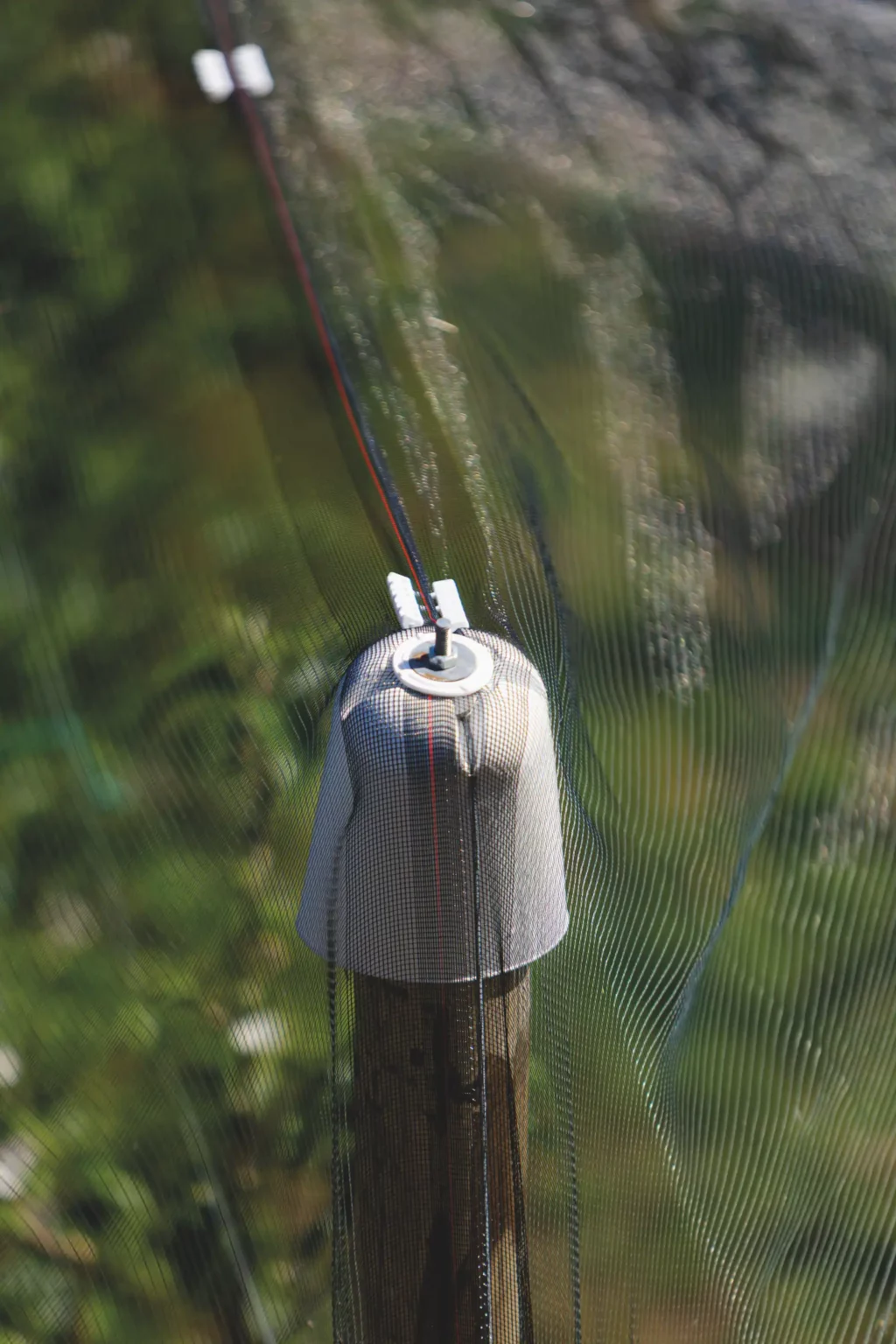
Protective nets are emerging as a technological solution that is increasingly being considered by pome fruit growers. Their use has been expanding, especially on farms seeking to ensure higher quality, protect against bad weather and respond to consumer demands.
Advantages of Using Nets:
- Protection against climatic phenomena: hail, frost, sunburn and rainfall near maturity (especially relevant in cherry trees).
- Pest and insect control: creating a physical barrier against pathogens and pests.
- Improved fruit quality: greater uniformity, size and colour.
- Soil preservation: less direct impact of bad weather on soil structure.
- Reduction in the use of plant protection products: less need for chemical interventions.
Disadvantages to consider - Installation and maintenance costs: high initial investment, which can exceed €70,000 for complete systems.
- Reduced light: excessive shading can negatively affect the colouring of bicoloured varieties.
- Physiological changes in plants: greater vegetative vigour and uncontrolled growth.
- Possible delays in harvesting, although this factor may be advantageous depending on the target market.

Photoselective Nets: A Technological Solution with Potential
Introduced in the 1990s, photoselective nets selectively filter sunlight, allowing the microclimate inside the orchard to be altered. Different net colours influence plant development and fruit quality. In Portugal, studies conducted by INIAV — with authors such as Miguel Leão de Sousa, Margarida Rodrigues and others — evaluated the impact of photoselective nets of various colours (black, red, grey, yellow and white) on the productivity and quality of “Gala” apples.
Practical Results
(5 years of testing – Gala Redlum)
The black net proved to be the most profitable, with a significant increase in productivity and yield compared to production without a net, which recorded losses of up to 23.9% in production and 19.1% in yield.
Economic Analysis: Is it Worth the Investment?
Costs vary depending on the type and complexity of the structure:
- Simple system: €8,000–13,000
- Partial coverage net (mesh): €27,000–30,000
- Network with rain cover (plastic): €30,000–€45,000
- Complete and automated systems: up to €70,000
Despite the high initial investment, the medium- and long-term gains — especially in regions with a high incidence of extreme weather events — can more than justify the cost.
Sustainability and Professionalisation: The Future of Fruit Growing
Modern fruit growing should be viewed as a high-precision activity, where scientific knowledge and technological innovation play a central role. The adoption of high-density production models, supported by technology and protection networks, allows for:
- Optimising the use of resources (water, fertilisers, energy).
- Reducing the environmental footprint per kilogram of fruit produced.
- Compliance with demanding food safety standards.
- Increased profitability and competitiveness of farms.
This model, far from being intensive in the traditional sense, is based on science, sustainability and harmony with the environment and society.
Netting: Yes or No?
The answer depends on the context.
Yes, if: - The region is prone to hail, sunburn or high rainfall.
- The aim is to increase fruit quality for demanding markets.
- The farm has the capacity for the initial investment.
No, if:
- The location has limited light and heat. The investment is not financially viable in the short term.
Conclusion
The decision to use protective nets must be based on technical data, economic analysis and market objectives. With climate change intensifying, the ability to adapt will be the difference between stagnation and success in Portuguese fruit growing.
António Oliveira – CarmoFarm customer