
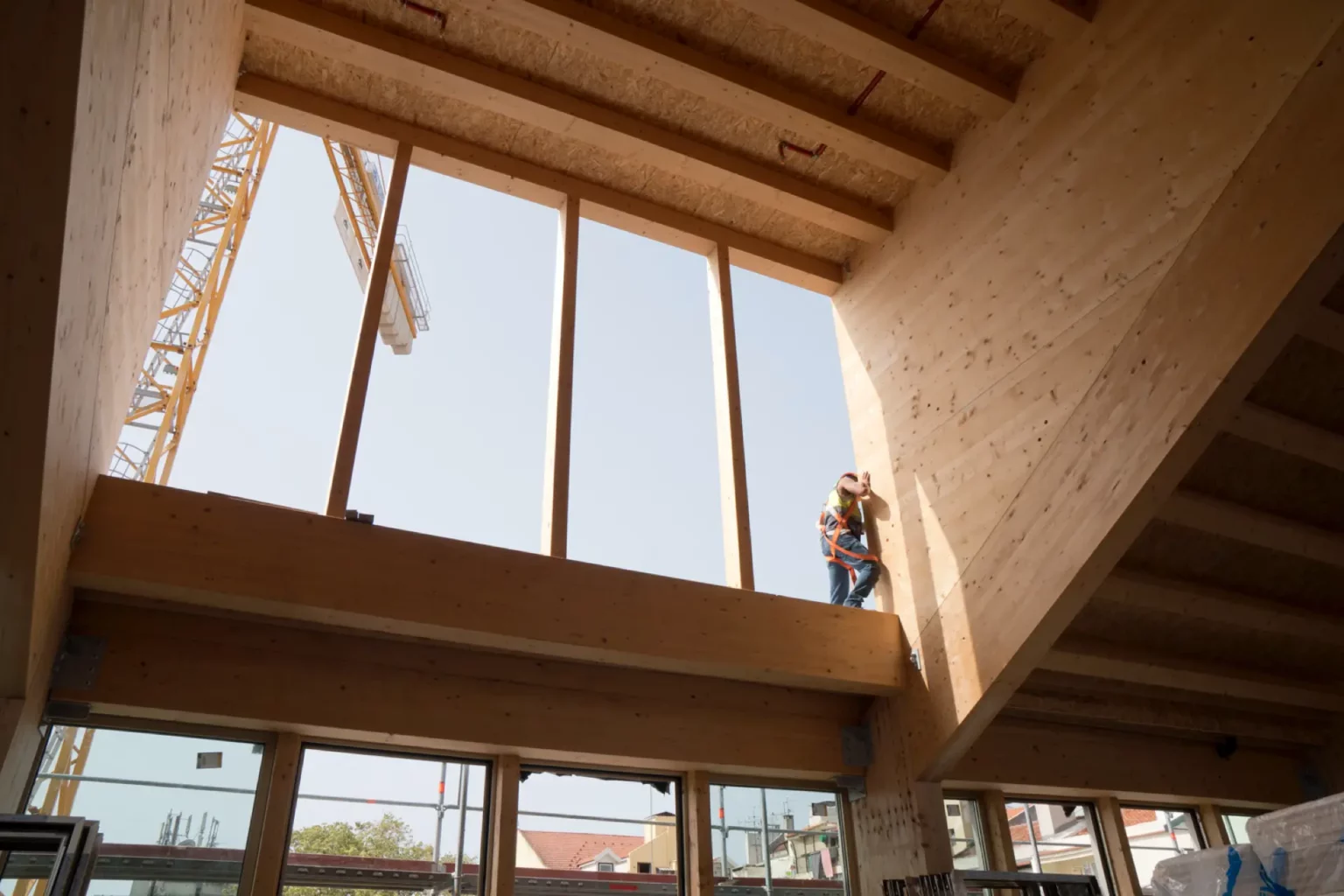
For decades, timber construction was viewed with scepticism. Too fragile. Too flammable. Too temporary. Yet timber has outlasted its critics — and today it is leading a new era in structural engineering.
It is time to definitively dismantle the three major myths still surrounding wood construction.
Timber burns easily
Yes, timber burns. But the real question is not if it burns — it’s how it burns. Lisbon’s Altice Arena — the country’s largest and most demanding performance venue — is built using glued laminated timber.
Why? Because timber has a unique fire behaviour: it chars on the surface, forming a natural insulating layer that slows fire progression. This predictable performance prevents sudden structural collapse and allows safe evacuation within the designed fire-resistance timeframe.
While steel weakens and concrete can spall under extreme heat, timber self-protects. It is not a weakness. It is nature’s intelligent engineering.
Timber doesn’t last
History proves otherwise. In Japan, wooden temples have stood for over a thousand years. In Lisbon, the Pombaline downtown district still rests on timber structural grids. Durability is not a limitation of timber — it is a matter of knowledge and correct treatment.
Modern drying processes, thermal modification, preservative treatments and ventilated design systems have transformed wood from a traditional material into a high-performance technical solution. It resists fungi, moisture, insects and time itself.
And unlike many materials, timber can be repaired, maintained and renewed for centuries.
Timber is not strong
Let’s talk about CLT — Cross Laminated Timber. A new concrete — more sustainable. An industrial product — more natural. A structural material — lighter and smarter. Engineered timber is already used in buildings exceeding 100 metres in height, such as Mjøstårnet in Norway.
Timber strength is not inferior — it is different. It works with lightness, flexibility and elasticity. When combined with intelligent structural design, it pushes boundaries once thought impossible.
Today, timber competes with concrete and steel in every structural field — with one major advantage: it is renewable, carbon-storing and provides unmatched thermal and acoustic comfort.
Conclusion
Conclusion: the future is timber — and it’s no myth Timber is no longer the material of the past. It is the material of the present — with memory — and of the future — with vision. Technical. Safe. Durable. Strong. And fundamentally human.
Building with timber today is a rational, sustainable and technologically advanced decision. The myths have burned away. What remains is the truth. And what we build with it begins now.